

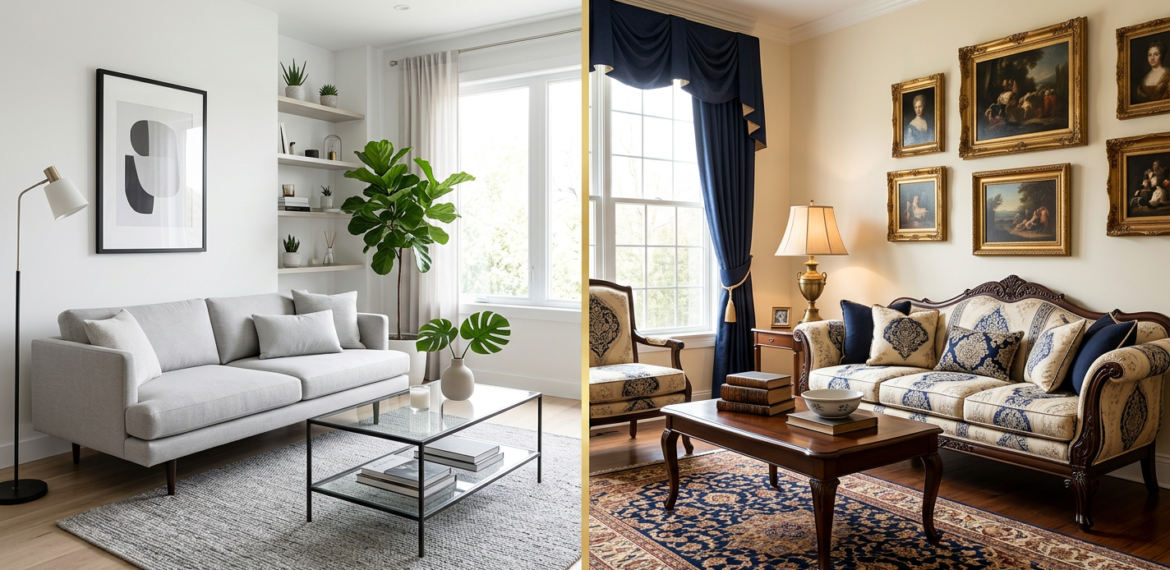
When it comes to designing your home, few decisions are as important or as confusing as choosing between modern interior design and traditional interior design. Many homeowners in India, especially in cities like Hyderabad, struggle with this choice because both styles are visually appealing but very different in mood, materials, and overall vibe.
Modern interiors focus on minimalism, clean lines, and functionality, while traditional interiors lean toward classic elegance, rich textures, and timeless details. Understanding what each style truly means and how it fits your lifestyle, budget, and space can help you avoid expensive redesigns later and create a home that feels uniquely yours.
What Is Modern Interior Design?
Modern interior design is characterized by simplicity, open spaces, and a focus on form and function. It emerged in the early 20th century and has evolved into one of the most popular interior design styles today, especially for apartments, lofts, and contemporary villas.
Key features of modern interior design include:
- Minimalist decor with fewer furnishings and clutter.
- Neutral color palettes like white, gray, beige, and black, often accented with bold colors through art or accessories.
- Geometric furniture shapes—sleek sofas, floating shelves, modular kitchens, and platform beds.
- Materials like glass, metal, concrete, and polished wood that create a clean, refined look.
- Open-plan layouts that connect the living room, dining, and kitchen for a spacious feel.
Modern interiors are ideal for people who love clean, organized spaces, smart homes with voice‑controlled lighting and automation, and homes that feel light and airy. They are especially popular among young professionals, tech‑savvy homeowners, and compact apartment owners in metro cities.
However, some people find modern interiors too cold or impersonal, especially if they overuse stark colors and hard surfaces. Without warm textures and personal decor, a modern home can feel like a showroom rather than a cozy living space.
What Is Traditional Interior Design?
Traditional interior design takes inspiration from classic European and Indian styles. think damask wallpapers, carved wood furniture, rich fabrics, and ornate details. This style is all about timeless elegance, symmetry, and comfort.
Main elements of traditional interiors include:
- Warm color palettes such as deep green, navy blue, burgundy, cream, and gold.
- Detailed furniture with carved legs, tufted upholstery, and classic silhouettes.
- Layered textures like velvet curtains, patterned rugs, and heavy drapes.
- Symmetrical layouts and clearly defined rooms—living room, dining room, drawing room, etc.
- Traditional lighting fixtures such as chandeliers, brass lamps, and decorative sconces.
Traditional interiors suit family‑oriented homes, larger villas, and heritage houses where guests are often hosted and spaces feel cozy and welcoming. This style is also popular among those who love antiques, vintage furniture, and classic art.
On the downside, traditional interiors can look too heavy or old‑fashioned if not updated with contemporary touches. Heavy furniture and dark colors can make small rooms feel cramped. That’s why many designers today suggest a modern‑traditional blend instead of going fully one style.
Modern vs Traditional: Key Differences
To decide which interior design style suits your home, compare them in terms of layout, color, materials, and lifestyle compatibility.
Aspect | Modern Interior Design | Traditional Interior Design |
Overall mood | Minimal, sleek, and contemporary | Warm, cozy, and timeless |
Colors | Neutral with bold accents | Rich, warm tones with patterns |
Furniture | Simple shapes, modular, low to the ground | Ornate, carved, classic silhouettes |
Layout | Open-plan, free-flowing spaces | Clearly defined rooms, more formal |
Materials | Glass, metal, concrete, polished wood | Solid wood, stone, brass, velvet, silk |
Lighting | Recessed lights, LED strips, track lights | Chandeliers, ceiling fans with lights, table lamps |
Best for | Apartments, small homes, modern villas | Larger homes, family houses, heritage properties |
Understanding these differences helps you ask the right questions:
- Do you prefer open, airy spaces or well‑defined, cozy rooms?
- Do you like simple, clutter‑free interiors or rich, layered textures?
- What kind of lighting and furniture maintenance can you manage?
Which Style Suits Your Home Best?
Choosing between modern and traditional interior design depends on your space, lifestyle, and personal taste.
Modern interiors suit:
- Small apartments and compact homes where space optimization is key.
- Open kitchens and modular kitchens that emphasize clean lines and hidden storage.
- Minimalist homeowners who don’t want to accumulate too many decorative items.
- Tech‑integrated homes with smart lighting, hidden TVs, and wall‑mounted units.
Traditional interiors suit:
- Large villas, independent houses, and joint families who enjoy hosting guests.
- Heritage homes or properties with classic architecture like high ceilings, moldings, or door frames.
- Interior design lovers who enjoy collecting rugs, artwork, and decorative pieces.
- Older homes where you want to create a warm, nostalgic atmosphere.
In cities like Hyderabad, Bengaluru, and Mumbai, modern interior design is growing fast due to the rise of compact apartments and young professionals. However, luxury homes and farmhouse interiors still heavily use traditional styles with a modern twist.
Can You Mix Modern and Traditional Styles?
Yes. and many people already do. The modern‑traditional blend (also called “transitional” or “mod‑trad”) is one of the most popular interior design trends today.
To mix modern and traditional interiors successfully:
- Keep a neutral base (walls, floors, ceilings) and add color and pattern through furniture and decor.
- Pair a modern sofa with a traditional rug or a vintage mirror with a sleek console table.
- Use a single accent color (like navy, mustard, or emerald) across both modern and traditional pieces.
- Mix lighting styles—modern pendant lights in the kitchen, but a chandelier in the living or dining area.
This hybrid style suits people who want the clean functionality of modern interiors with the warmth and personality of traditional interiors. It’s perfect for homes that evolve over time, as you can keep updating pieces without redoing the entire decor.
How to Choose the Right Interior Designer
If you’re still unsure whether modern interior design or traditional interior design fits your home, hiring the right interior designer can make a big difference. Look for professionals who:
- Have experience in both modern and traditional home interiors.
- Specialize in space planning, modular kitchens, living room design, bedroom interiors, and compact home interiors.
- Provide 3D design visualizations so you can see how each style will look in your space.
- Understand Indian climate, light, and budget constraints—like Hyderabad’s hot summers and the need for good ventilation.
Before finalizing, ask for a mood board or portfolio of previous projects. This will help you visualize whether they can handle modern minimalist interiors, luxury traditional interiors, or a modern‑traditional fusion.
Final Thoughts: Which Style Fits You?
In the end, the choice between modern vs traditional interior design isn’t about trends. it’s about how you live in your home every day.
- If you love clean, organized spaces, smart homes, and compact living, go for modern interior design.
- If you enjoy warm colors, rich textures, and classic elegance, choose traditional interior design.
- If you want the best of both worlds, create a modern‑traditional blend that reflects your personality and lifestyle.
No matter which style you pick, focus on functionality, comfort, and personal taste over blindly following what’s “in fashion.” Your home should feel like a reflection of who you are not someone else’s Instagram feed.
By understanding the core principles of modern and traditional interior design, using the right interior design keywords, and working with a good interior designer, you can create a home that balances beauty, comfort, and usability for years to come.
