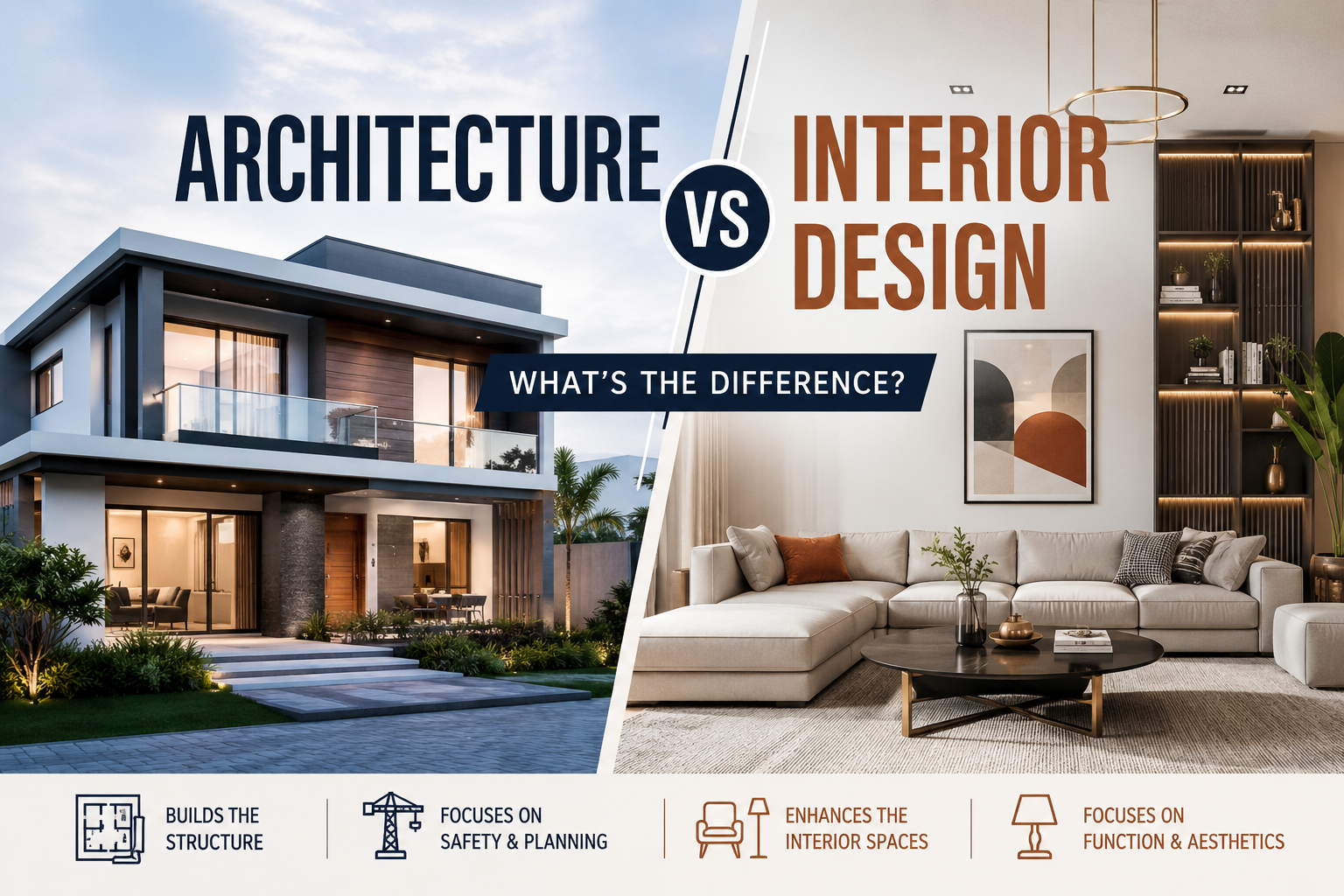
Architecture vs Interior Design: What’s the Difference?/
Architecture vs Interior Design: What's the Difference? | Complete Guide
When planning a home renovation, a commercial build out, or a brand new construction project, one question comes up almost immediately: do you need an architect or an interior designer? The two professions are frequently mentioned in the same sentence, and many people assume they are interchangeable. In reality, architecture and interior design are two distinct disciplines within the broader field of building design, each with its own scope of work, professional training, licensing requirements, and role in the design and construction process.
Understanding the difference between architectural design and interior design services is not just useful trivia. It directly affects your budget, your timeline, and the quality of the final result. Hiring the wrong professional at the wrong stage of a project is one of the most common and costly mistakes in residential and commercial design. This guide breaks down exactly what each discipline covers, where their responsibilities intersect, and how to decide which expert your project actually needs.
What Is Architecture? Understanding the Role of an Architect
Architecture is the discipline concerned with the structural design, safety, and overall form of a building. Architects are licensed professionals trained in building science, structural engineering coordination, urban planning principles, and construction documentation.
Site analysis and land use planning:
Before any design work begins, architects evaluate the building site including its topography, solar orientation, drainage patterns, soil conditions, and relationship to surrounding structures. This stage of site planning determines how a building will be positioned and how it will interact with its environment.
Structural and spatial design:
Architects determine a building’s footprint, number of stories, load bearing walls, and overall spatial layout. This includes deciding how rooms connect to one another and how people move through a building, a discipline known as architectural space planning.
Building systems integration:
A major part of architectural services involves coordinating with structural, mechanical, electrical, and plumbing engineers to ensure the building functions safely and efficiently. Architects also plan for fire safety systems, accessibility compliance, and energy efficient building design.
Permitting, zoning, and code compliance:
Because architecture directly affects public safety, architects must be licensed to prepare construction documents and submit them for building permit approval. They ensure a project complies with local zoning regulations and building codes.
Facade and exterior architecture:
The building’s exterior, including its roofline, window placement, materials, and overall silhouette, is shaped primarily through architectural design, giving a structure its visual identity within the streetscape or landscape.
In short, an architect answers the question of how a building should be engineered, structured, and shaped to function safely and serve its intended purpose.
What Is Interior Design? Understanding the Role of an Interior Designer
Interior design picks up where structural architecture leaves off, focusing on the human experience within a space. Interior designers specialize in space styling, material selection, and creating environments that reflect both function and personality.
Aesthetic direction and mood curation:
Interior designers develop color palettes, textures, and design themes, whether minimalist interior design, industrial style interiors, contemporary residential design, or luxury interior styling, to create a cohesive atmosphere throughout a space.
Furniture layout and interior space planning:
While architects define the size and shape of a room, interior designers determine how that room is furnished for optimal ergonomics, traffic flow, and daily usability. This is often referred to as interior space planning, distinct from the architectural planning that precedes it.
Materials, finishes, and fixtures:
Flooring, wall coverings, lighting design, cabinetry, and upholstery fall under the interior designer’s expertise. These choices influence both the visual appeal and the long term functionality of a space.
Human centered functionality:
Interior designers think about how residents or employees actually use a space, considering storage solutions, ergonomic furniture design, acoustics, and the practical flow of daily activity.
Personalization and brand identity:
For residential clients, this means translating lifestyle and personality into physical decor. For commercial clients, it often means aligning interior spaces with brand identity and workplace design strategy.
In short, an interior designer answers the question of how a space should feel, function, and reflect the people who use it.
Where Architecture and Interior Design Overlap
The boundary between architectural design and interior design is not always sharp, which is part of why the two fields are often confused.
Space planning overlap:
Architects plan the structural bones of a room while interior designers plan how that room is furnished and arranged, and both stages depend heavily on one another for a cohesive result.
Lighting design overlap:
Architects position windows and skylights for natural light, while interior designers select fixtures and ambient lighting solutions that complement those architectural decisions.
Custom millwork and built ins:
Cabinetry, staircases, and fireplace surrounds often require both structural input from an architect and aesthetic direction from an interior designer working together.
Renovation projects:
A home renovation may need an architect to relocate a wall or add a window, followed by an interior designer to handle finishes, furnishings, and decor once the structural work is complete.
Many design build firms today offer integrated architecture and interior design services, or employ professionals cross trained in both disciplines. This is especially common in commercial architecture and hospitality design, where architects and interior designers collaborate from the earliest concept stage.
Architecture vs Interior Design: Key Differences at a Glance
Aspect
Architecture
Interior Design
Primary focus
Structure, exterior, building systems
Interior aesthetics and spatial function
Licensing
Legally required in most jurisdictions
Certification recommended, varies by region
Project stage
Early, before construction begins
Can begin early or after the structure is complete
Core elements
Walls, foundations, safety codes, building systems
Furniture, color palettes, materials, decor
Typical deliverables
Blueprints, structural drawings, permit documents
Mood boards, furniture plans, material samples
Which Professional Does Your Project Need?
The right choice depends entirely on your project scope.
Building new or renovating structurally
If you are building a new structure or undertaking a major structural renovation, start with a licensed architect. You will need expertise in zoning compliance, structural integrity, and building permit applications before any other design work can proceed.
Renovating within existing walls
If your project does not involve structural changes and instead focuses on refreshing the look and feel of a space, an interior designer is typically the right starting point.
Planning a full transformation
Many large scale projects require both disciplines. A common workflow is to engage an architect first to establish the structural and spatial framework, then bring in an interior designer to complete the space with furnishings, finishes, and decor. On larger projects, these two roles often run in parallel from the outset.
Simply refreshing decor
If you are simply refreshing your decor, you likely do not need an architect at all. An interior designer or decorator can help modernize a space without altering its structure.
Why This Distinction Matters for Your Project
Understanding the difference between architecture and interior design goes beyond terminology. It helps you set a realistic project budget, avoid hiring the wrong professional at the wrong stage, and communicate more effectively throughout the design and construction timeline. Architecture establishes the structural foundation of a space, while interior design brings that foundation to life through color, materials, and human centered function. Neither discipline is more important than the other since they are complementary components of a successful building design process.
If you are beginning a new project, the most useful first step is to clarify your scope by asking whether you are changing the shape and structure of a space, or how it feels and functions day to day. That single distinction will point you toward the right professional and set your project up for long term success.
Final Thoughts
Architecture and interior design are frequently mentioned together, but they represent fundamentally different disciplines within the design industry. Architects establish the structural framework including walls, systems, safety, and code compliance. Interior designers bring that framework to life through color, texture, furniture, and personalized styling. Knowing which professional you need, and at which stage of your project, can save significant time, reduce costs, and ensure a smoother path from initial blueprint to finished, livable space.
Acute Interiors creates modern, functional, and elegant spaces with precision and creativity, blending smart layouts, premium materials, and innovative design to deliver lasting comfort and style.